
Learning the Art of Bonsai: Carpet Dyeing Methods and What They Mean to You
Save me for later!
The carpet dyeing process. At first thought, dyeing carpet seems like a simple process, where either you use yarn fibers that are already dyed to make the carpet itself or it is dyed after woven together. Though carpet dyes can be simplified down to either is is pre- or -post dyed, there is, of course with much other concepts in life, more nuance to dyeing than that, and the method used can heavily influence how well the carpet will perform or look after everything is said and done. That’s also not even taking into account how different fibers react to dye and therefore how well it holds onto it without doing anything else to the fibers. There is an art to dyeing a carpet, and we want to take the time to sit back and look at what different dyeing methods do to different carpet types.
Before looking at anything, we should probably take a step back and look at how carpet itself is made. Knowing this will help us find why certain dyeing processes take place at certain points during the manufacturing processes. For synthetic fibers, the materials used to make the differing types of fibers are melted down into small pellets. After which, the fibers are pushed through a machine named a spinneret that squeezes the pellets into thin strands. This portion of the processes is called extrusion. Right after the pellets are moved through the spinneret, the fibers are normally a dull white, translucent color. From this point, the fibers are twisted together to make the yarns. In an earlier blog post, we discussed how the numbers of twists the yarn undergoes has an influence on how durable the individual carpet strands can be, which can be found here. The twisted yarn is then heat-set to help ensure the twists stay in-tact and not unravel.
Once here, we are going to keep things simple and assume the carpet is going to be tufted, which means a needle will thread the yarns through a backing. Most carpets in the United States are tufted carpets. Starting here, the process for natural fibers is the same. Different tufting devices product different results, where one cuts the fiber before the tufting needle threads another piece of yarn and other that loops it back into the backing itself—our cut and looped carpet options. At this point, if the carpet has not been dyed, another dyeing method is used to ensure the dull, white fibers have color and personality. Doing so prevents the dye from getting onto the backing, which can result in the actual backing having issues down the road. The fibers are then adhered to the backing with a latex adhesive to ensure the yarns stay in place; another backing is sometimes applied to add an extra layer of protection and stability. The carpet is then sheared, if cut, and depending on the manufacturer, the carpet is cleaned before being rolled up and shipped to be installed.
With that in mind, we can turn back to the different dyeing methods and see what the affects are of adding color at various points of the manufacturing process. To keep things organized, we will first focus on pre-dyeing methods, then to post-dyeing methods. Let’s jump in!
Pre-Dye
All pre-dye methods happen before the carpet is constructed. In one way or another, the fibers soak in the color, and sometimes that is during the creation of the fibers, while others it is right after. The dye will then sit differently on the fiber depending on the stage, with some pigment able to go through a whole, individual strand, while other colors sit on the surface. There are benefits and consequences to letting the dye penetrate through all the way, and the same can be said to methods that cause the dye to rest on the surface. Other methods will end up costing more than others and will be more laborious to do, which makes those carpets with such dyeing methods rather hard to find.
Solution Dyed (or Extrusion Dyed)
A solution dyed carpet is a carpet where each fiber has color that is saturated throughout the entire piece. If we take a solution dyed yarn and unravel the piece, we can see the color go throughout the entire fiber, meaning the center of the yarn will not be the dull, white color. To solution dye a carpet, we add the color right before the synthetic pellets go through the spinneret during the extrusion process. The color will go through to each and every single fiber, and instead of coming out the spinneret translucent, they will be dyed to their respective color. Everything is completely mixed—the synthetic material and the dye—and cannot be undone because the synthetic materials is being melted down and thus causing a chemical reaction.
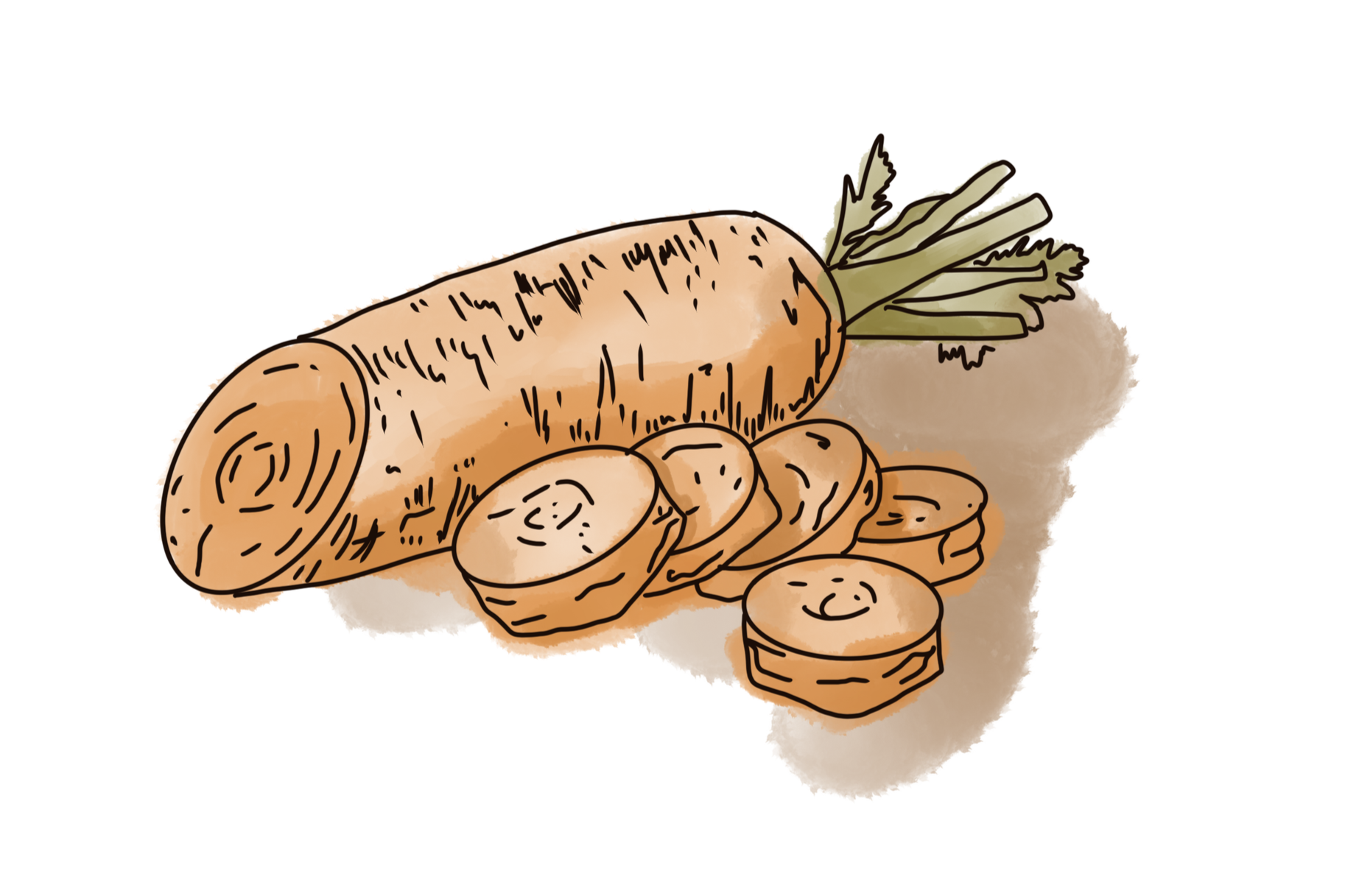
The Chopped Carrot Analogy
A common analogy used in the carpet industry to compare solution dyed carpet to other dye methods is to look at a carrot compared to a radish. Refer to the image for the carrot and scroll down to the next dye method for the image of a radish.
In terms of color, the orange hues of a carrot can be seen all the way through the carrot, no matter how it is cut. The carrot is the same color throughout, and solution dyed fibers are the same way; if you cut into a the fiber to see the central piece, the dye goes all the way through and will be consistent.
Radishes, on the other hand, are a red hue on the exterior, but when you cut into a radish, the color fades and turns white. The center of a radish is not the same color as the exterior, which is a strong analogy to other dye methods. View below to see the sketch of a radish for comparison.
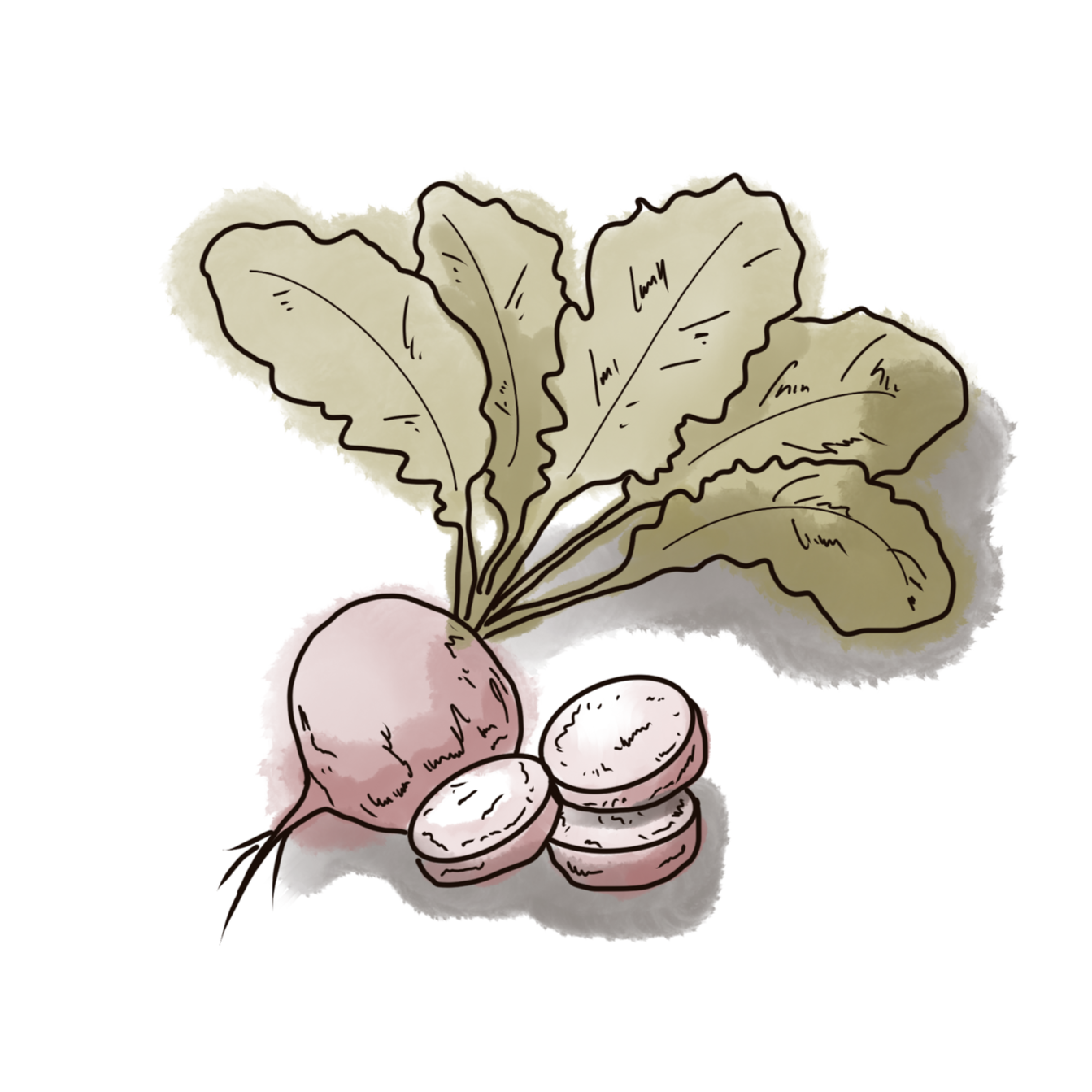
The Chopped Radish
Most, if not all, dye methods are more akin to the color of a radish, where if you are able to see the internal cross-section cut of a fiber, the center will normally be the original color of the fiber, white is normally a white color, regardless if it is a natural or synthetic fiber. Solution dyed fibers are unique in this regard, which is what makes the appeal for this dye method that much higher than other options.
There are a couple of benefits to having the dye penetrate all the way through the fiber strand. For starters, the carpet itself will be resistant to fading because the color goes throughout the entire fiber; there is the same color providing support within the core of the fiber, thus allowing the original hue to shine through even after the outer layer of the fiber is worn. The color consistency over its life is rather impressive.
Furthermore, because the dye has been chemically mixed with the synthetic material and cannot be separated again, other chemicals like bleach will have a harder time removing the color from the carpet without causing damage to the fiber itself. In this situation, solution dyed carpet is a lot like our hair, where the pigment of individual hair strands hold color; once bleached, given enough bleach to work with and time, pigment can be removed from the hair, but the strand is left damaged. Solution dyed carpets can behave the same way, where some manufacturer’s like Dreamweaver claim diluted bleach can be used to remove stains. The stain can be removed this way, but the fibers are put at a higher risk of being damaged.
In other words, solution dyed carpet can be easier to clean after facing a stain because there needs to be more effort, time, and exposure to certain chemicals to fully strip the color away from an area of carpet, but that does not mean solution dyed carpet is stain-proof or resistant. However, with that said, depending on the carpet, a small bleach-to-water ratio can actually work to remove certain stains from carpet if diluted and used properly. Damage to the individual strands can still happen, but that’s less of a conundrum compared to using bleach on carpets that have the dye on the surface—or, easy to be stripped from the fiber.
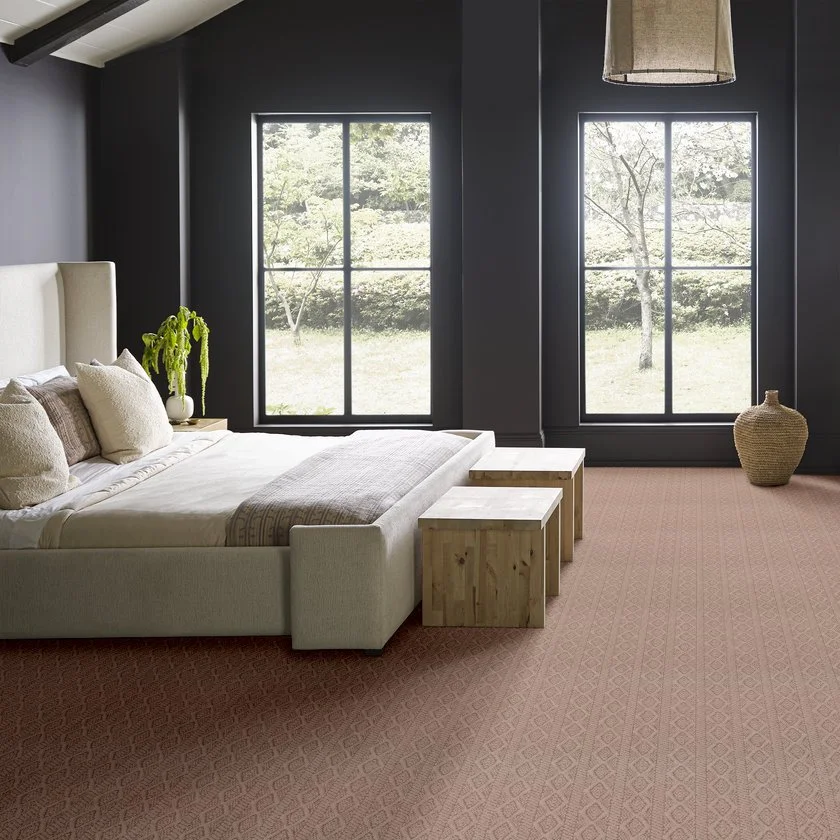
Anderson Tuftex Crochet in Desert | Click on the image to visit the manufacturer's page
Solution dyed fibers are also less likely to be vibrant in color, though that does not make it impossible. Between the mixing and multiple heating processes the fibers go through, the color usually turns out darker with muted tones. The best way to explain the idea is through cake. When someone is making a chocolate cake, the baker usually mixes cocoa powder into the mix, which results in the entire cake turning into a dark chocolate-brown color. The baker then uses the same cocoa to make a chocolate frosting, which ends up being a more vibrant brown color. By being mixed with other contents, then undergoing a hot chemical reaction, the cake itself turns to a darker color, whereas the frosting stays true to the original dye’s color. The same concept works with solution dyed carpet, where such carpets are usually less vibrant and tend to stay in the same white, grey, black, and brown color palettes.
However, solution dyed colors (as in, the actual dye pellets) have come a long way, and we are starting to see more and more color options available. Not as much vibrancy is lost when mixed with the fiber. For instance, let’s take a look at Anderson Tuftex’s Color Theory collection, which showcases various styles and dozens upon dozens of color options for each style; Crochet, pictured, is a part of this collection. With various shades of red, orange, yellow, green, blue, and purple filling the catalogue, manufacturers such as Anderson Tuftex have shown it is possible to solution dye (In this case, nylons. Hooray! More on that in a moment.) more vibrant hues.
Currently, manufacturers with a luxury-focus are just about the only carpet vendors that have more vibrant solution dyed options, or rather options outside of the standard neutral color palette. Such brands also include Masland, Fabrica, and Stanton, with the first two (Brands a part of the Dixie Group.) currently running a campaign to “Step Into Color” as a way to reintroduce colors themselves back into design. Thank goodness because color is something we desperately need in our world.
Nylon fibers and other high quality options also tend to cost more going the solution dyed route. Compared to polyester, nylon needs to be heated to a higher temperature to melt and undergo a more complex method of solution dyeing to make sure the integrity of the fiber is maintained through the chemical reaction. This can be dangerous for those dyeing nylon, which contributes to the increase price in the spinneret itself that is designed to work with nylon. Therefore, solution dyed nylons tend to cost a lot more than other nylons of the same quality, as manufacturers are put at risk to maintain a more expensive piece of equipment and ensuring their employees are safe during the dyeing processes.
Solution dyed carpets also can only be done for synthetic fibers, as there is no way to solution dye natural fibers like wool that do not melt down. Usually when a natural fiber is listed to be “solution dyed”, there is more than likely an extremely small amount, arguably negligible, of a synthetic fiber. For instance, Masland’s Capri carpet is 100% New Zealand Wool and is solution dyed, as seen on the website page here. However, reading the description of the carpet, we see the following:
“Inspired by the Isle of Capri, where the water is a crystalline blue with silver reflections. It’s an experience of beautiful flowing water as if you are suspended in the heavens. We add a sparkle of reflection into our wool product Capri with a high-luster nylon reminiscent of a fine silk thread, affording the performance of nylon and natural beauty of wool. The combination is breathtaking and exactly what you would expect from Masland.”
In this case, to bring about the glistening look of sunlight hitting ocean water, a small amount of a high-luster fiber is added—and in this case, a nylon that was designed to do exactly that. The wool is likely dyed using a beck-method (more on that later), which can get really close to a solution dye. However, to get the luster look, Masland used a solution dyed nylon to give the wool something it cannot do on its own naturally. Doing so brings in the best of both worlds, the quality of wool and a sliver of the vibe of nylon. The amount of nylon used is probably also less than 10% and likely even 5%, as then we would see the blend ratio listed with the carpet instead of “100% New Zealand Wool”. A unique artistic choice by Masland, if you ask me.
Skein Dyed
Skein dyed carpets are normally natural fiber or natural fiber blends using a majority of wool, cotton, and linen and a minority of nylon or polyester. The process starts with cleaning the yarns by putting them through a gentle bath, sometimes with a vinegar mixture or other softer chemicals relative to bleach, before being dipped into a dye vat for coloring. The yarns are usually bundled up into a loose coils on a reel, better known as a skein and thus giving the dyeing method its name. By dipping the entire skein into the dye, the color is able to penetrate deeper and for longer, allowing for a uniform color that will last. Once the dye has taken hold to the fiber and is showing the colors the manufacturer wants, the skein heated to ensure the dye properly bonds to the fibers, which allows the fiber to be colorfast and lasting. Once heated at the right temperature for long enough, the yarn is cooled down and washed to remove any excess dye.
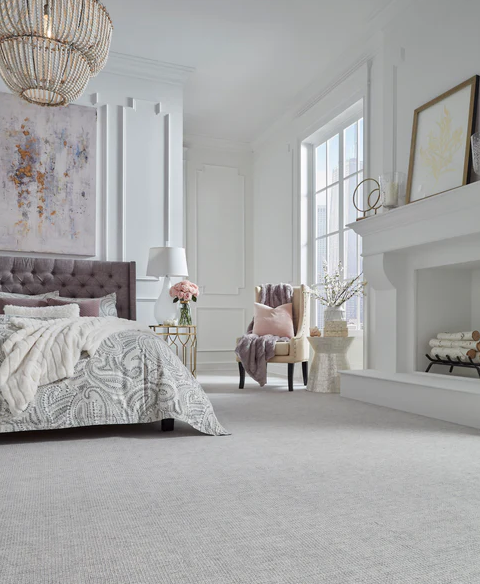
Masland’s Hera in Child | Click on the image to view the webpage on the carpet.
A skein dyed carpet offers more creative freedom during the manufacturing process, as there is a larger color option to select from and the ability to tuft unique patterns with the yarns. Compared to post-dyeing printing methods, to which we will discuss later in the article, artists can be more precise and intentional with where a certain color appears in a pattern. The artistic possibilities open up with skeined dyed options, which leads to stunning carpets and rugs that could not otherwise be replicated. The color also tends to be more rich and vibrant, offering greater depth and visual interest. Skein dyed carpets also tend to have a stronger color consistency across the carpet roll itself, with streaks and other deformities becoming an extremely rare occurrence.
Compared to other coloring methods, skein dyeing is known to create a soft texture because the baths remove debris or other textures and the dye method itself is gentle, thus preserving the natural soft qualities of fibers like wool and cotton. Furthermore, due to the care and attention that has to take place during skein dyeing, these carpets tend to have a higher quality in terms of gentleness on the skin and durability. Wool, for instance, is already a fairly durable fiber type, so by trying to preserve the integrity of the fibers, the characteristics unique to the fiber-type will be preserved and ultimately highlighted compared to other wools that have undergone under treatments. That’s not to say treated wool will outperform pure skein dyed wool, but the dye method does preserve certain elements without having to make up for the damage or other alterations done through other manufacturing treatments; sometimes certain processes enhance specific characteristics, as seen through Masland’s Capri in the previous section.
However, the gentler methods do come with a price. Skein dyed fibers tend to cost more than other dye methods because more time and attention is needed to make sure the yarns are cleaned properly before and after the fiber comes in contact with the dye. Furthermore, because this method dyes in skeins, or groupings, rather than an entire roll of carpet at a time, skein dyeing tends to cost more on average. The yarns are also more prone to staining and fading over time due to sunlight without having an extra layer of protection to keep the dye within the fiber itself; after all, the dye is not chemically bonded and is able to be removed.
Skein dyeing can also have a larger environmental impact because of the number of times the yarns have to be washed: once before, the water used during, and after—and this is just for the fibers to create the carpet, not the actual carpet itself. Compared to other methods, the carpet fibers may only have to go through a single bath or cleaning right at the end of the manufacturing period.
Stock Dyed
Stock dyed carpets are rather similar to skein dyed carpets, except these are fibers that are dyed before being spun into yarn. Furthermore, the fibers are not typically washed before being dyed and instead only washed after to remove any excess colorant. Because individual fibers can be surrounded on all sides of the dye without being blocked by the yarn twisting, stock dyed fibers tend to hold onto even more color compared to skein dyed options. Without certain steps, the cost of stock dyed yarn can therefore be cheaper, as it does not need to have the same amount as gentle care and washing.
However, because the fibers themselves are still in their raw form and thus more exposed to the dye, the process itself actually damages some of the natural structures of the fibers, which causes the output to be hard, crusty, and stiff. As such, when it comes time to actually spinning the fibers into a usable yarn for the carpet, additional chemicals or lubes need to be added help the fibers become more flexible like they were before. The final product, in comparison to skein dyed yarn, will be less soft to the touch.
In terms of the actual dye, stock dyeing can be viewed in a similar light to solution dyed, though the final product is still not quite the same; the center of the fiber will still be the original color, but the fiber could absorb more dye thoroughly compared to skein dyed yarns. Therefore, stock dyed carpets are still more-prone to staining and color fading over time compared to solution dyed options, but less so than skein dyed carpets. For natural options, stock dye can be a strong comparison to what synthetics can do with solution dyeing, while having the benefit of having more color options, vibrancies, and capabilities than the synthetic counterpart.
Compared to skein dyed, stock dye is slightly more economically conscience, where one to two of the cleaning baths can be completely foregone. There is the water for the dye, the wash after being dyed, then if the manufacturer does a final clean before rolling up and shipping, there’s another batch of water. That is still arguably a lot of water being used for the carpet, but compared to skein dyeing, the water usage is much less and therefore slightly better for the environment in that regard.
Space Dyed
A space dyed carpet is a carpet that is made from a yarn that has multiple dye colors along its length. The yarn itself goes through a machine where the dye is either sprayed on, printed on, or otherwise applied at specific intervals to create a unique color pattern. Much like our other dyed methods, the yarn is then heated to a specific temperature to allow the dye and fiber to bond properly, then cooled and washed to remove the excess dye. Compared to the other dye methods mentioned thus far, space dyed yarn tends to have more variation in methodologies, and each can produce slightly different affects or provide other benefit to cost ratios.
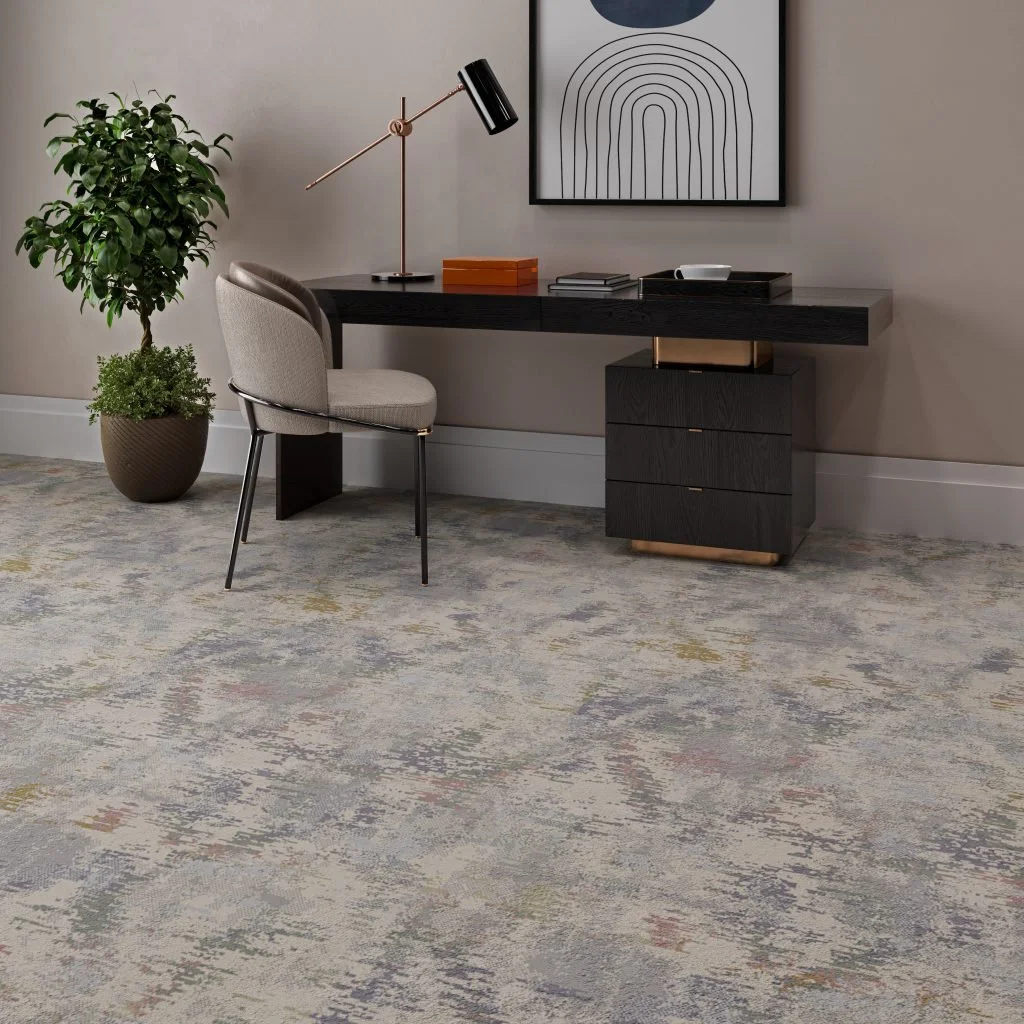
KANE Adventure in Happening | DISCONTINUED LINE
The carpet in the room pictures uses a space dyed carpet. Here, we can see the transition between colors, as the colors shift between pink and purples to blues and yellows, with the occasional green in the mix. With a constant shift of hues, the carpet visually has more depth and interest going on, despite the carpet pile itself being consistent.
In this particular space, the carpet is meant to be the highlight of the room, adding a touch of creativity and curiosity to the space with ease. In other cases, a space dyed carpet like the one pictured can provide a wonderful color palette for the space, allowing homeowners to emphasis a single color within the carpet and use other colors as accent colors within the room or throughout the house as a way to tie everything together. A rather fun and inspiring way to add color, indeed!
Click on the image to go to the old listing on Kane’s website
In general, a space dyed carpet tends to have high variation between rolls, and sometimes even within the same roll. Every segment of the carpet is unique and will have slight differences to one another, especially if the carpets come from different dye-lots entirely. If you are looking for character and something one-of-a-kind, a space dyed carpet can be a budget friendly way to go about adding personality.
With the different color variations, space dyed carpets also allow for more layered and color-related effects. The carpet itself becomes more interesting to the eye with the different colors interacting with one another in various patterns, which in and of itself can make for an excellent design choice, especially when used for rugs. The layered color affects also lend to unique color wears, where the space dyed carpet can still look wonderful as the color itself is fading. If all carpet fibers are the same color, color fading over time can be noticable, especially when it fades in splotches. Different colors in the yarn fiber itself will means it will be less visible to fading because other colors will shine through.
The color variation does come at a cost. Usually, the yarn holds 6 different colors total, meaning the color palette can be limited. Furthermore, space dyed carpets tend to be less customizable due to the nature of its creation and the dyes manufacturers use in the first place. Most companies tend to only have a handful of colors and are unable to switch colors. The industry also tends to stay in the neutral color palette, with unique and vibrant colors like shades of blue, green, red, and purple, because those colors can work in nearly any home aesthetic. If homeowners are wanting to buy a carpet that will last through all of their design choices, they are going to want to go with a neutral color palette and use decorative rugs to bring color to the floor. As such, manufacturers usually do not want to play with risk and use vibrant colors or even allow that as an option. Brands such as Masland, Fabrica, and Anderson Tuftex, however, do have custom dyeing options available for most of their carpets, which helps combat the death of color within homes.
Post-Dye
From this point forward, we are looking at all dyeing methods that happen after a carpet is tufted. Whole yarn skeins are not being dyed, then used, meaning there are sections of a the carpet yarn that is undyed. The undyed portion can be seen from the back prior to the stabilizing layer being glued on. In other words, if you are able to pry off the backing of the carpet, you might be able to see the undyed yarn, though you do run the risk of damaging the fibers. This is not recommended on a home-installed carpet or the sample boards from a flooring retailer.
Continuous
The most common carpet found in the industry is continuous dyed. Ironically, we only have a few samples in our showroom that are continuously dyed and are rarely looked at. Essentially, the roll of carpet is tufted, then laid onto a conveyer belt. As the carpet moves down the belt, a machine either sprays on the dye or the “blanket” (the roll of carpet without the backing) is dragged through a dye bath. Once the carpet has moved through the dye, it is dried to, once again, ensure the color adheres to the fibers and doesn’t immediately wash away. Most manufacturers then scurry the carpet, or give it a final cleaning, before rolling it up and sending it off.
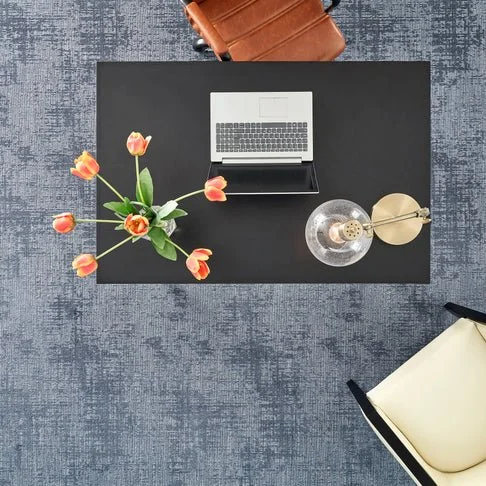
Fabrica Inkwash in Painterly | Click on the image to visit Fabrica’s page on Inkwash
Despite what initial impressions, a continuously dyed carpet does not have to be a solid color; in fact, it’s rather the contrary. The image highlights one of Fabrica’s few continuously dyed carpet, and if you look carefully, you can actually see the pattern repeat of the carpet. (For those struggling to see it, the easiest spot to compare is the upper left portion of the table to the upper right portion, where upper is by the brown leather chair. The pattern repeats every 36” x 38”, for reference.)
The pattern repeat tells us that this is likely a machine spraying on the pattern, rather than the carpet going through a dye bath—though that may be possible if the carpet is cationic dyed, but this isn’t likely because EnVision™ BCF Nylon (the fiber type the carpet is made out of) is not a known cationic dyeable nylon. With that said, I wouldn’t put it past Fabrica to use cationic methods in this type of situation, especially since they are known for “advanced tufting TECHniques” and their playful takes with color experimentation.
Regardless of whether the carpet is dyed using electric methods, as discussed later in the article, the continuous dyeing process becomes a little bit easier to imagine, where the spray nozzle(s) move within the repeatable pattern to add the darker colored pattern as instructed.
Dyeing a carpet this way is arguably the most cost effective method for a manufacturer, so a continuously dyed carpet tends to be more budget friendly than other dye methods. There does not need to be a lot of interaction during the creation processes, nor do employees need to be extremely gentle with the fibers like they do with skein dyed yarns.
The lower cost can come back to bite you, though. There is a greater risk for the dye to spread from the middle and puddle at the ends, meaning the color will be more heavily saturated on the edges of the carpet compared to the middle. Carpet manufacturers have gotten better at addressing the side-dyeing problem in recent years, so this is less of a risk now than it was in the past by a long shot. However, if this does happen, the color variation within a single roll can therefore be noticeable and will be harder to work with at every stage of the installation. Seams between different sections of carpet will be harder to align and make disappear if the color is noticeably different. Furniture placement can make for awkward room flow in order to hide or blend the carpet color to look even. Color inconsistencies can make it even more difficult to design a space, as the splotches can cause other design choices like paint color or furniture fabric options to clash or cause other visual issues.
Furthermore, the dye is merely sitting on the outside of the carpet fibers and is likely not penetrated that deep. Higher quality carpet brands can combat this issue by having their carpet sit and soak in the dye for longer, allowing the fibers to absorb more dyed and therefore hold onto more color over time, but these tend to be nylons that are continuously dyed and will therefore cost more. Lower-end continuous dyed carpet or from low-to-mid grade carpet manufacturers will face sun and color fading with their carpets sooner compared to higher-end brands and fibers, which thus shows wear-and-tear sooner than what may be desired.
Print dyed carpets are, more or less, what they sound like: the dye itself is injected into the yarns after the carpet has been tufted or otherwise connected to the backing. Essentially, the carpet is a blank, white canvas ready to be printed onto. To do so, there are digital, injection, or dye-sublimation techniques, which allows the dye to be layered onto the carpet with great precision. The manufacturer is then able to create unique patterns and designs—and sometimes offering options like custom pictures, patterns, logos, and other designs. Polyester carpets are the most commonly print dyed options.
The world of print dyeing is somewhat similar to the color options and creativity of skein or stock dyed carpets, and instead, the process happens after the yarn is somehow woven together. Colors are limitless, especially compared to continuous dyed options, and can be used in any way someone can imagine, thus turning carpet into a canvas. However, since the dye itself is not adhered prior to tufting and thus not allowed to penetrate deeper, print dyed colors tend to be less durable and colorfast as similar creative options.
Printed carpets also tend to have a low pile with a precise height. Doing so will require less ink to inject into the carpet fibers and have as smooth of a surface to “paint” on as possible. A typical printed carpet will not be fluffy for that reason, though that does not mean they don’t exist at all; they may cost more instead. Having such a short pile height does allow the carpet to be a little bit more durable because it will be less likely to mat, snarle, or otherwise become visibly damaged. Printer carpets, therefore, are popular options for commerical spaces, espeically if a business wants to print their logo or another design on a rug. Carpet tiles, on the other hand, are more likely to be solution dyed to add an extra layer of color protection, but printed carpets are also popular in commerical spaces.
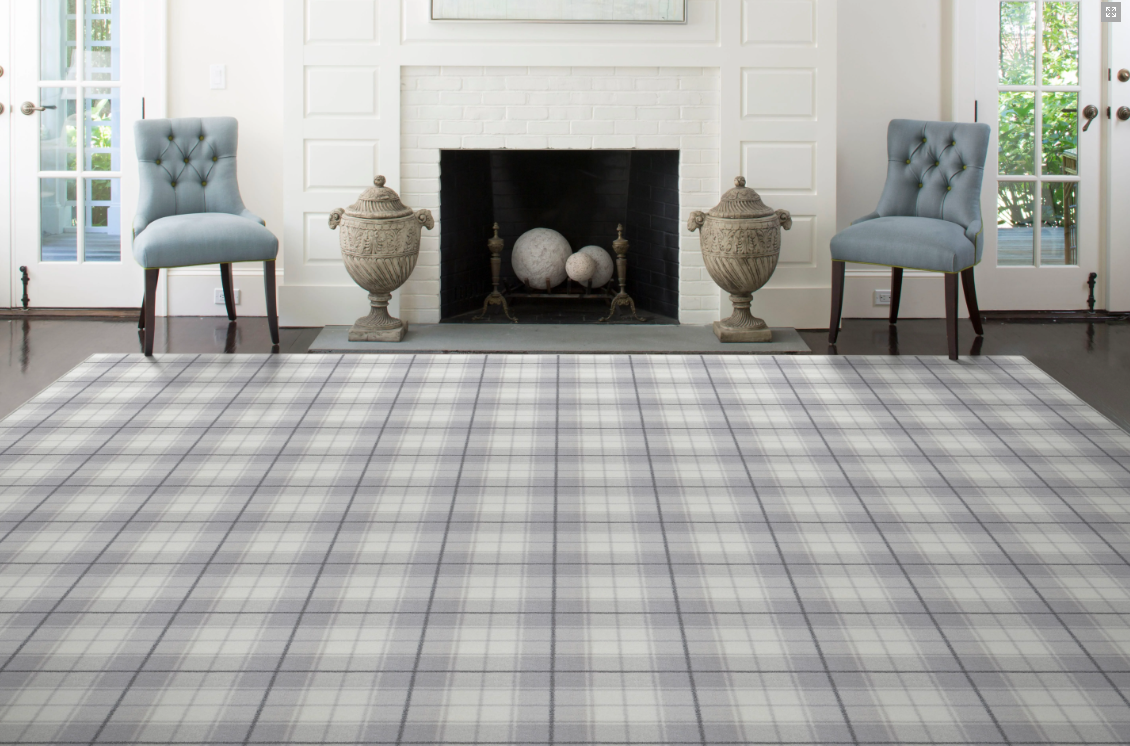
Stanton’s Kings Cross in Platinum | Click on the image to view the product listing.
Furthermore, because the design is printed on, the design itself can appear pixelated, as printers cannot print vector (resolution-independent images that instead use mathematical formulas to dictate how a design is formated) images without translating a design to pixels. In terms of other forms of printing, such as t-shirts and posters, vector images are able to scale without losing any quality and will still look as it did once completed, but the printer itself still takes the design and uses a grid to determine what is printed and where. The more information (Dots [of ink] Per Inch, DPI), usually the better, and most image printers support around 300ish DPI, which is where a design tends to print the best and look more like the original vector image. Going back to carpet printers, they are not likely able to have a “DPI” that high for the carpet pattern design, nor are there even that many “dots” available in that inch. Depending on the quality of the carpet, there can be around 10 stitches (or individual tufts) per inch of carpet, meaning there are potentially a total of 100 stiches per inch of carpet (and therefore, a grid of 100 spaces that can hold ink. Remember, the average image printer can do around 300 or more.) 72 DPI is usually what pixelated images tend to be around in terms of ink per inch, and 100 isn’t that much better, thus making the design appear blurry. This is why blankets and other textiles of a photo tend to look pixelated.
Going back to carpet from that printing rant, of course not all patterns will appear pixelated. If the designer is intentional with the pattern they are creating, the pixelated effect can be mitigated. As such, if the pixel look is a concern, higher-end brands that do print dyes will be less likely have this problem and will have designers that can help you design options that fit your aesthetic. Pre-dyed yarns will also be able to combat this problem better as well, as they are not limited to DPI like printed textiles are. That’s why hand-tuft hobbyists that create their own designs do not have the pixel problem and will instead produce results more akin to vector graphics or hand-drawn designs.
Beck
Beck dyed, piece dyed, or batched dyeing all refer to the same method, in which a tufted carpet after being sewn together from end to end to make a cylinder is placed into a Beck machine and is immersed in dye for hours. A Beck is like a washing machine, which tumbles or otherwise spins the carpet around a hot dye solution of around 200 degrees Fahrenheit for at least 30 minutes and usually for a couple of hours. During the carpet bath, someone watches over the temperature, dye concentration, and pH of the solution to make sure the dye adheres to the carpet fibers properly and will have a proper color consistency across the entire piece of carpet. Beck dyeing is done in smaller batches and for nylon or wool carpets, which also tend to have a higher face weight (ounce weight) that need more care to ensure the entire fiber is dyed—in other words, these are dense, high quality fiber carpets.
Compared to continuous dyed carpets, the side match issue where the dye can soak in deeper on the sides of the carpet rather than evenly over the entire piece is less likely to ever occur due to the continuous tumbling nature. Furthermore, with consistent monitoring of the dye solution, the color will come out with a beautiful, arguably unmatched consistency. The colors themselves can also be more vibrant and full of life because most of the time, either nylon or wool goes through the beck dyeing process; nylon and wool are some of the best fibers that hold onto color and will hold onto it with great intensity, whereas polyester and other similar synthetic fibers will dull the color. Thus, beck dyed carpets are going to have some of the great color consistency and vibrancy out of most of the color-dyed options—even some pre-dyed methods.
However, the beck machines are huge, as they often need to hold somewhere around 150 square yards of fabric that are sewn from one end to the other to ensure the face of the carpet is dyed evenly. Alongside the time required to make sure the carpet properly absorbs and holds onto the dye, beck dyed tends to be more expensive than other dye methods. The actual cost and the time cost add up rather quickly, and because the machines can hold single rolls at a time and sometimes even less than 150 square yards, not a lot can be manufactured at a time. As such, beck dyed carpet will cost more, but but since the fibers tend to be high quality nylons and wools, the price is also covering for the care for the actual fibers.
Cationic Dye
Cationic dye uses pH and electrical charge of different solutions and fiber types to its advantage. Using a cleaned cationic-dyeable polyester or nylon, the tufted carpet is placed in a bath of positively charged solution with a basic pH measurement (think like bleach, but not necessarily to the power of bleach), which causes a vibrant color binding with unique fiber colors created within the carpet, despite being placed in the same dye as neighboring fibers. From a chemistry perspective, cationic dyed carpets are rather fascinating and quite complex; if the chemistry is too complicated to understand or leads to more confusion, skip the next paragraph. There will be a TLDR at the end.
Prior to being tufted, during the polymerization stage where the synthetic pellets are being melted down and put through the spinneret, the plastic itself is charged with anions (negative charged ions, where ions are electrically charged atoms). Doing so changes the actual structure of the fibers from something that is a little bit more structured (though not perfect like a crystal, but somewhat like one) to something a little bit more chaotic and amorphous (like liquid water, though not quite that extreme). Because the structure is even less structured together and more disordered like a liquid, the fibers can absorb dye quickly. The positively charged ions (the cations) are attracted to the anions on the actual carpet fiber, which then causes the dye to bind to the fiber. The dye itself needs to have a basic, alkaline pH in order for the process to work, as the higher the pH, the better the electrical current will be. If different types of anionically charge fibers are used, such as a blend of polyester and nylon, with each having different luster values, the fibers will react differently than one another, thus creating a unique color speckling within the same dye bath. Therefore, you can get the color speckling unique to most pre-dye options while being a post-dyed carpet.
TDLR; the carpet fibers have a negative electrical charge, which causes the dye solution that is positively charged to become really attracted to the carpet itself and bind quickly. If the carpet has a blend of different types, like different types of polyesters and nylons mixed together, the carpet will come out with different colors speckled all over, despite the entire carpet going into the same dye bath.
Sadly, cationic dyed carpets are not entirely common within the industry and can be rather hard to find. They do allow for vibrant color options for polyester, which as discussed before can be hard to dye with bright and intense colors. Furthermore, a single dye bath is all that is needed to create a multi-colored effect, which in and of itself is rather fascinating and unique compared to every other method. Electrical currents also allow for the fibers to take on the dye quicker without needing to be melted down or soaked for hours on end, with a fixation time of 5-15 minutes on average.
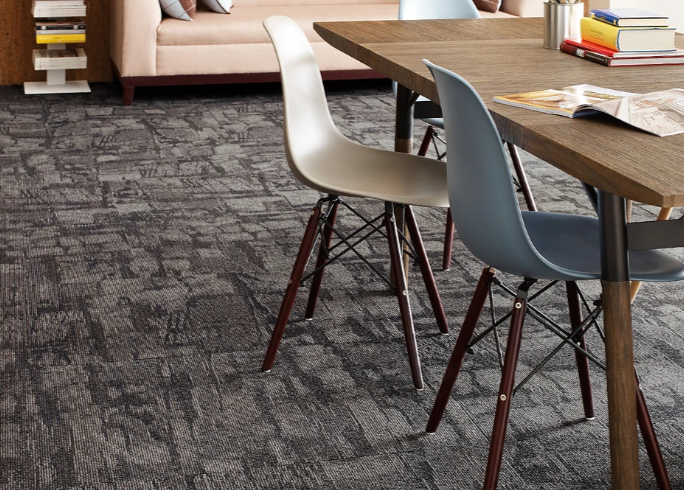
A Shaw Innovation: Solution Q® Nylon | Click on the image for more information
Shaw’s Solution Q® Nylon is a solution dyed carpet using cationic and anionic dyes and fibers. A notable quality stated by Shaw reads as follows:
“The fiber has no dye sites available for acid-based stains (i.e. coffee) to attach to the chemical structure of the fiber, which gives the fiber an ability to prevent acid-based stains from staying put, ensuring only water is needed for stain removal.”
-Shaw Contract, emphasis added | More information, follow this link.
An electrically charged dye method does allow for unique stain resistance, as shared with Shaw specifically. Due to the acid-defense nature, we therefore see cationic dyed carpets more frequently in commercial-esque formats, like carpet tiles. There is not a strong market for a residential version of cationic dyed carpets. Now that one of the only residential manufacturers gone for cationic carpet, Phenix, has closed their carpet lines, there is not much left. There is not a strong demand for this type of carpet, likely in part due to education on the mater, marketing, and the actual cost of the carpet.
However, to make sure the dye solution works, the pH of the solution needs to be measured frequently. If the solution becomes too acid, the dye becomes less of a conductor of electricity with less cations available to bind to the anions, meaning someone needs to make sure it stays consistent. The actual fiber for cationic dyeing can also cost more because of the extra steps interjectected to make sure the carpet iself will have a negative charge; cationic-dyeable polyester or nylon is not a common fiber type and will thus cost more manufacture because the demand is inherently lower.
For more information on cationic-dyed carpets, visit DyStar’s product guide here. DyStar is a manufacturer who uses cationic dyes for some of their carpets and has a more in-depth explanation to the process itself.
Dye methods are vast and can change the outcome of the carpet in so many different ways. From texture to durability to color options, dye methods can do so much to a carpet. That also goes to say there truly isn’t a dye method that is better than another. In terms of durability, fiber type, carpet density, and construction are the three biggest determining factor. Solution dyed carpets are simply going to be easier to clean without worrying about the dye itself bleeding onto other fibers, which can be beneficial if spills and other stains are a concern for your household. However, design options can be more important to others, which makes options like skein and stock dyeing a stronger preference. Print dyes make for unique rugs, where Beck dyes allow extremely thick nylons and wools a dyeable option without going through the hasile pre-dyeing the fibers.
There are costs and benefits for all carpet dye methods, and not one is truly greater than another. It depends on your needs and wants out of a carpet. Truth be told, dye methods in terms of durability should be viewed last for this reason, as some of the things the method tells you is not always the most helpful information.
For insights as to what can help you find what information that will be helpful for your carpet needs, visit our two other carpet information blog posts: Carpet Density and Fiber Type.